10 Benefits of Reformer Pilates
Method
6 min — 18 July 2026
What actually changes after eight weeks on the machine — and what doesn't.
Eight weeks, twice a week.
The Form Edit
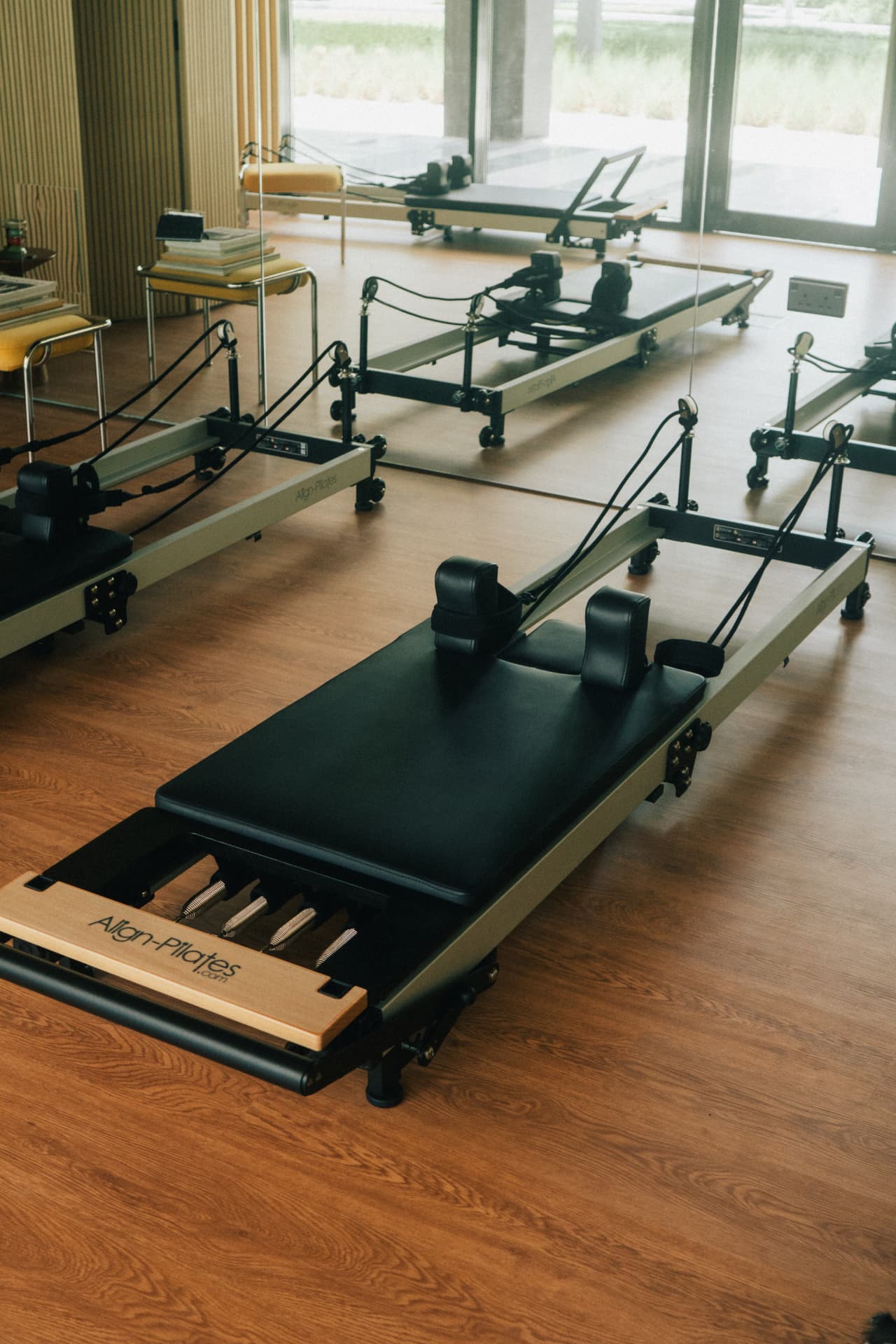
Nad Al Sheba, Dubai — four reformers, one room.
Reformer Pilates is often sold on aesthetics — long muscles, flat stomach, better posture. All of that is real, but it undersells the method. The reason clients stick with reformer for years, not weeks, is that it changes how the body works, not just how it looks. Here are the ten benefits we see most reliably in the studio.
1. It builds strength without joint stress
Springs give you variable resistance without the impact of weights or the pounding of HIIT. That makes reformer one of the few strength formats you can do four to five times a week without the joint fatigue that ends most training programs.
2. It fixes posture faster than almost anything else
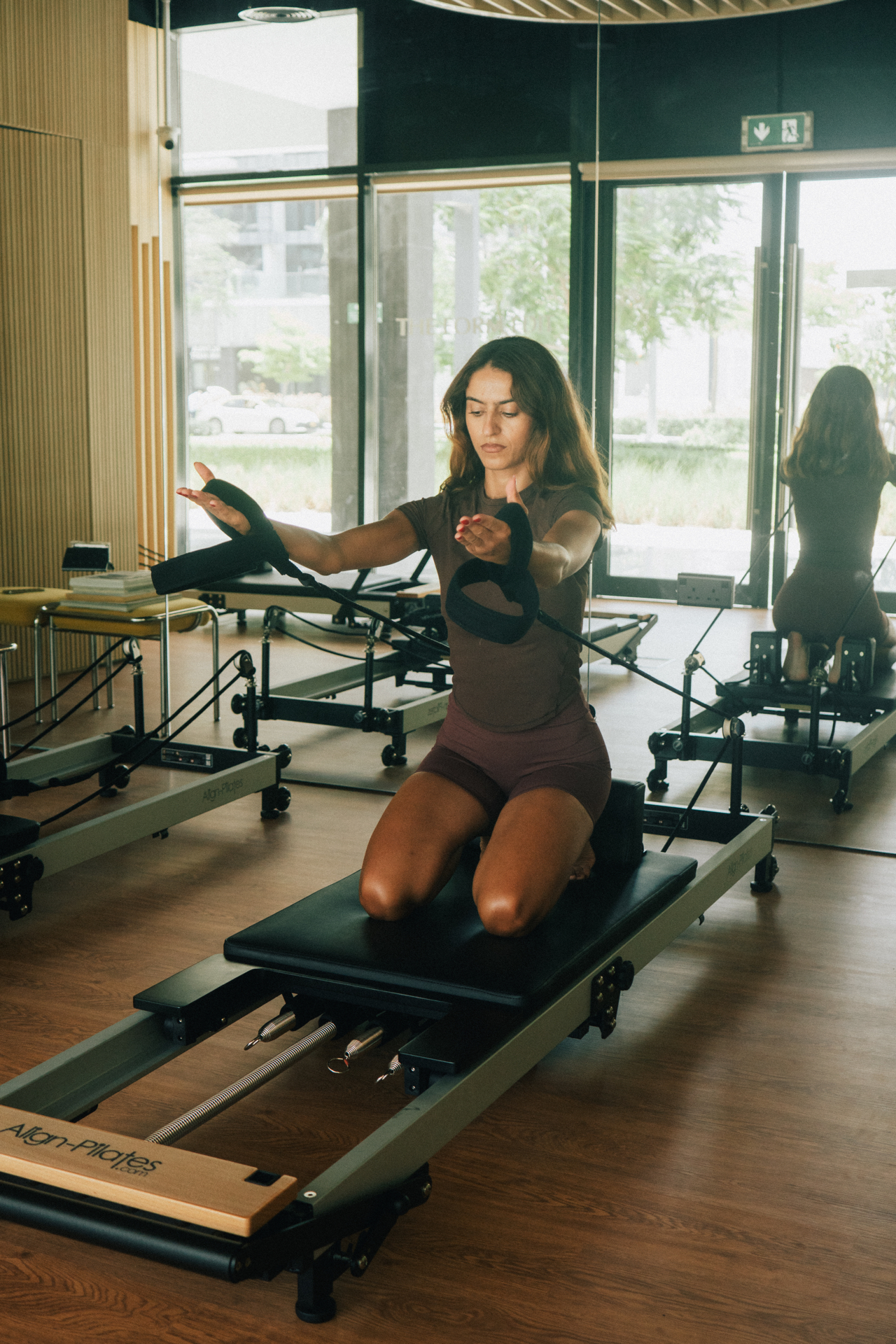
Because the reformer forces the body into alignment before it lets you move, poor posture patterns get corrected in real time. Clients who spend eight to twelve weeks on the machine consistently report standing taller, sitting straighter, and moving with less back and neck tension.
3. It builds deep core strength
Every reformer exercise is a core exercise — even the ones that look like arm or leg work. The instability of the carriage recruits deep stabilising muscles (transverse abdominis, multifidus, pelvic floor) that crunches never reach.
4. It improves flexibility and mobility
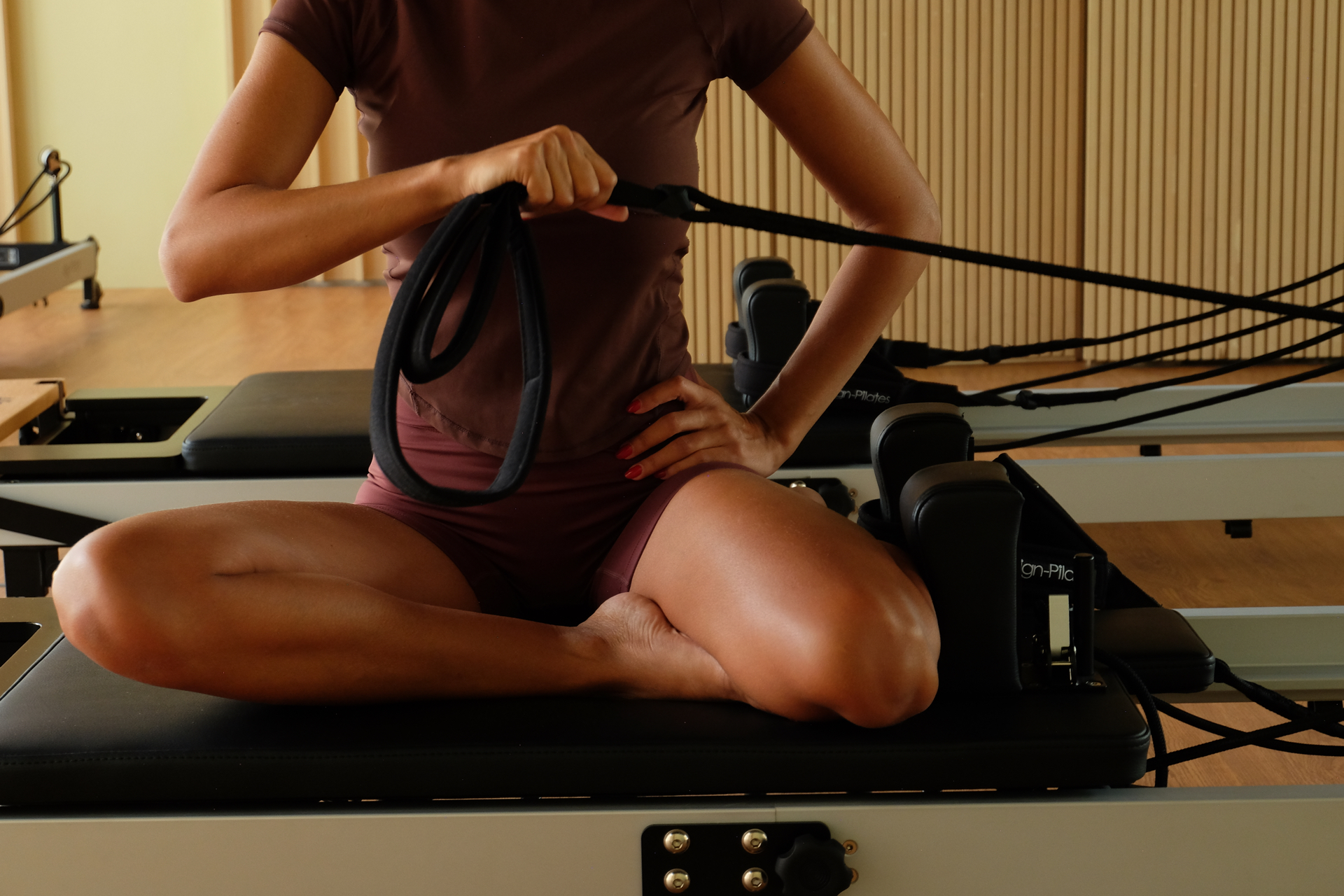
Reformer combines strength and stretch in the same movement. Springs pull you back into range; straps let you work through end-range positions safely. Over time, hips, shoulders, and hamstrings open up without dedicated stretching sessions.
5. It's genuinely low-impact
No jumping, no heavy loading, no compression through the spine. That makes reformer suitable for injury recovery, pregnancy (with clearance), postnatal return, chronic back pain, and anyone whose body doesn't tolerate high-impact training anymore.
6. It teaches you how to breathe
Sounds small; isn't. Reformer instruction is built around breath patterns that stabilise the core and control movement. Clients who learn to breathe properly on the reformer carry it into running, lifting, and everyday stress.
7. It's efficient
Forty-five to fifty minutes, two to three times a week, produces visible changes in eight to twelve weeks for most beginners. Compared to the volume required for equivalent results from mat work or gym training, the return per hour is high.
8. It reduces back pain — for most people
Chronic lower-back pain is one of the most common reasons clients start reformer in Dubai. The combination of core strengthening, hip mobility, and postural correction addresses the mechanical causes of most non-specific back pain. It's not a medical treatment — but for a lot of people it works better than one.
9. It improves balance and coordination
Working on a moving carriage forces constant micro-adjustments the body doesn't get from stable-ground training. That translates directly to better balance, better athletic performance, and — later in life — lower fall risk.
10. It's sustainable
The biggest benefit is the one no one advertises: reformer is a workout you can do at 30, 50, and 70. Most training programs have a shelf life. This one doesn't.
What reformer Pilates won't do
- It won't replace cardio. Add walking, running, or cycling if you want cardiovascular fitness.
- It won't build max strength like heavy lifting. If your goal is a 150kg deadlift, use a gym.
- It won't produce dramatic weight loss on its own. Weight loss is mostly nutrition; movement supports it.
- It won't work if you go once a month. Two sessions a week is the practical floor.
How long until you see results?
Most clients feel a difference in how they move within three to four sessions. Visible changes — posture, muscle tone, core strength — typically show up between weeks six and twelve of consistent practice. Structural changes to alignment and strength compound over months, not weeks.
Try it properly
The Form Edit in Nad Al Sheba, Dubai runs private and semi-private reformer sessions in a studio built around four machines and one instructor. If you want to know whether the benefits above apply to your body, the intro session is the fastest way to find out.
Book
Your intro session in Nad Al Sheba.
Four reformers. One instructor. Forty-five minutes to know if the method is right for you.