Lagree vs Reformer Pilates: What's the Difference?
Method
6 min — 18 July 2026
Same-looking machines. Very different workouts. Here's how to decide which one is right for you.
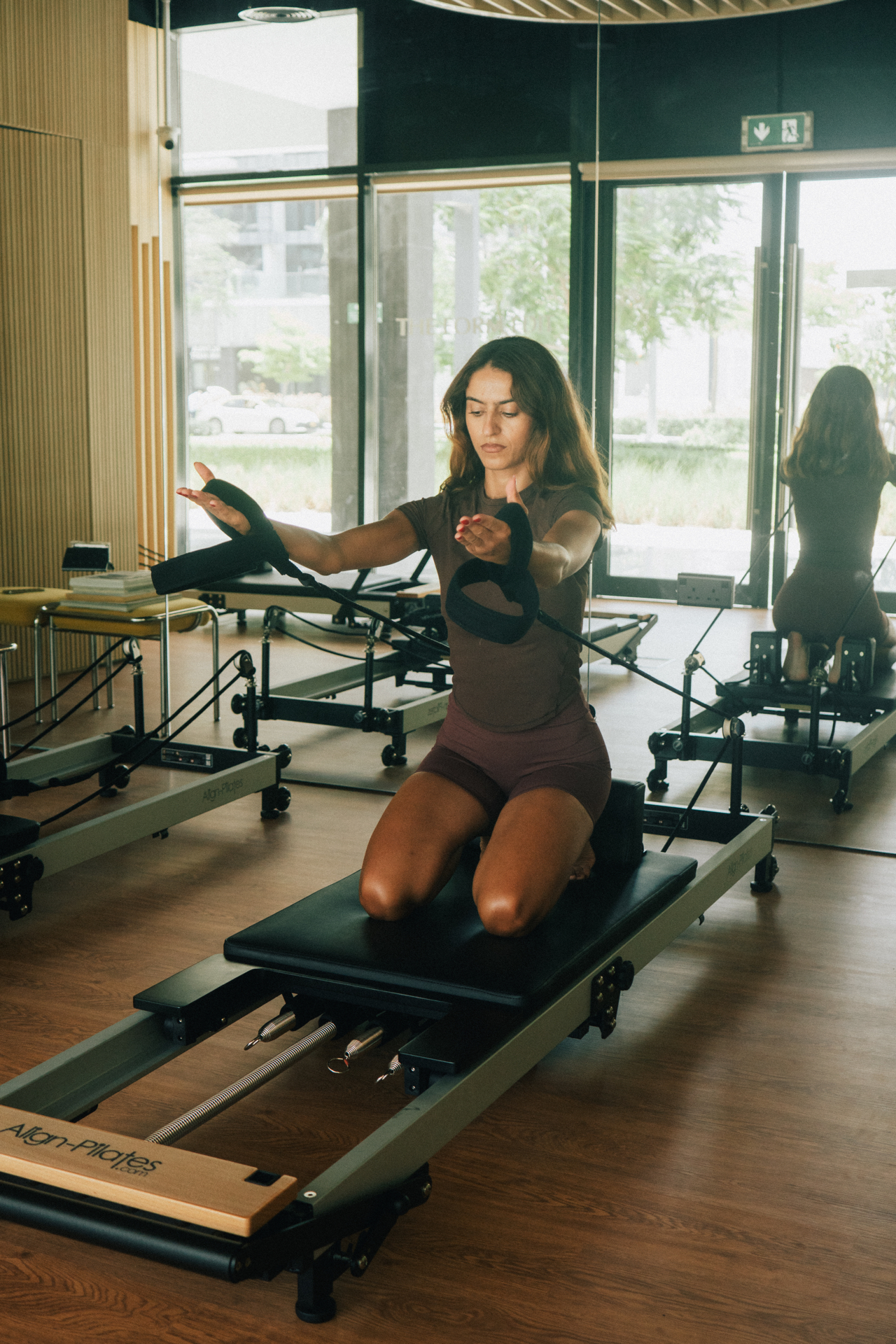
Springs, straps, and the difference between them.
The Form Edit
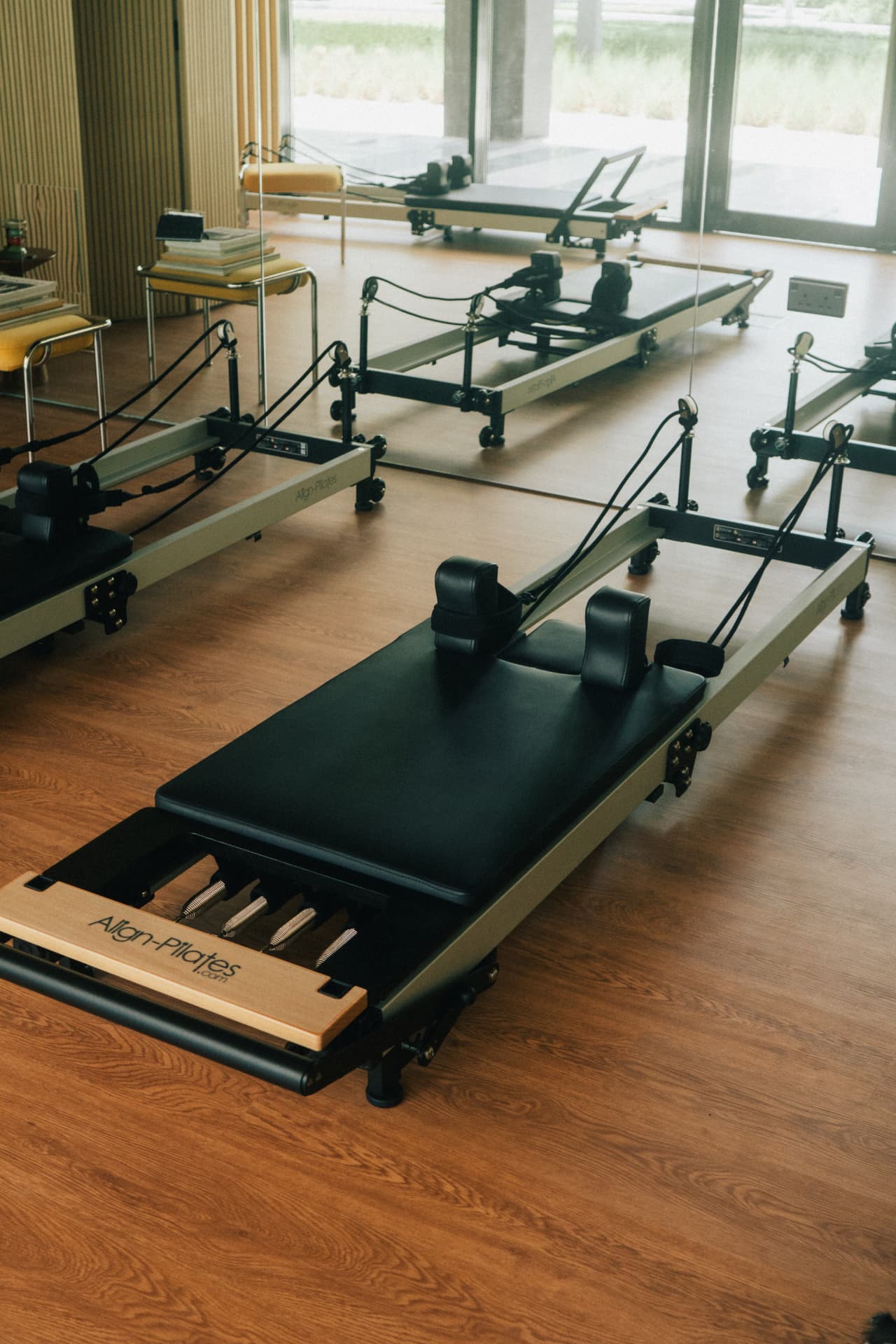
Nad Al Sheba, Dubai — four reformers, one room.
If you've walked past a boutique fitness studio in Dubai lately, chances are you've seen a sliding carriage in the window — and chances are, you weren't sure whether it was a reformer or a Megaformer. They look almost identical from the street. On the mat, they're two very different workouts.
Here's what actually separates Lagree from classical reformer Pilates, and how to pick the one that fits your body and your goals.
The short version
- Reformer Pilates: slow, controlled, precision-focused. Trains stability, alignment, and long-muscle strength.
- Lagree: slow, high-tension, muscular-failure focused. Trains strength and endurance through constant time-under-tension.
- Both are low-impact. Both use springs. That's roughly where the similarity ends.
The machines aren't the same
A reformer has a lighter carriage with wooden handles, foot bar, and straps — designed for the range of classical Pilates exercises Joseph Pilates developed almost a century ago. A Megaformer, invented by Sebastien Lagree in the early 2000s, is longer, heavier, and has front and back platforms designed for holding intense static positions and slow transitions between them.
Same working principle — resistance from springs on a sliding carriage. Different tool, different intent.
How the workout feels
Reformer Pilates
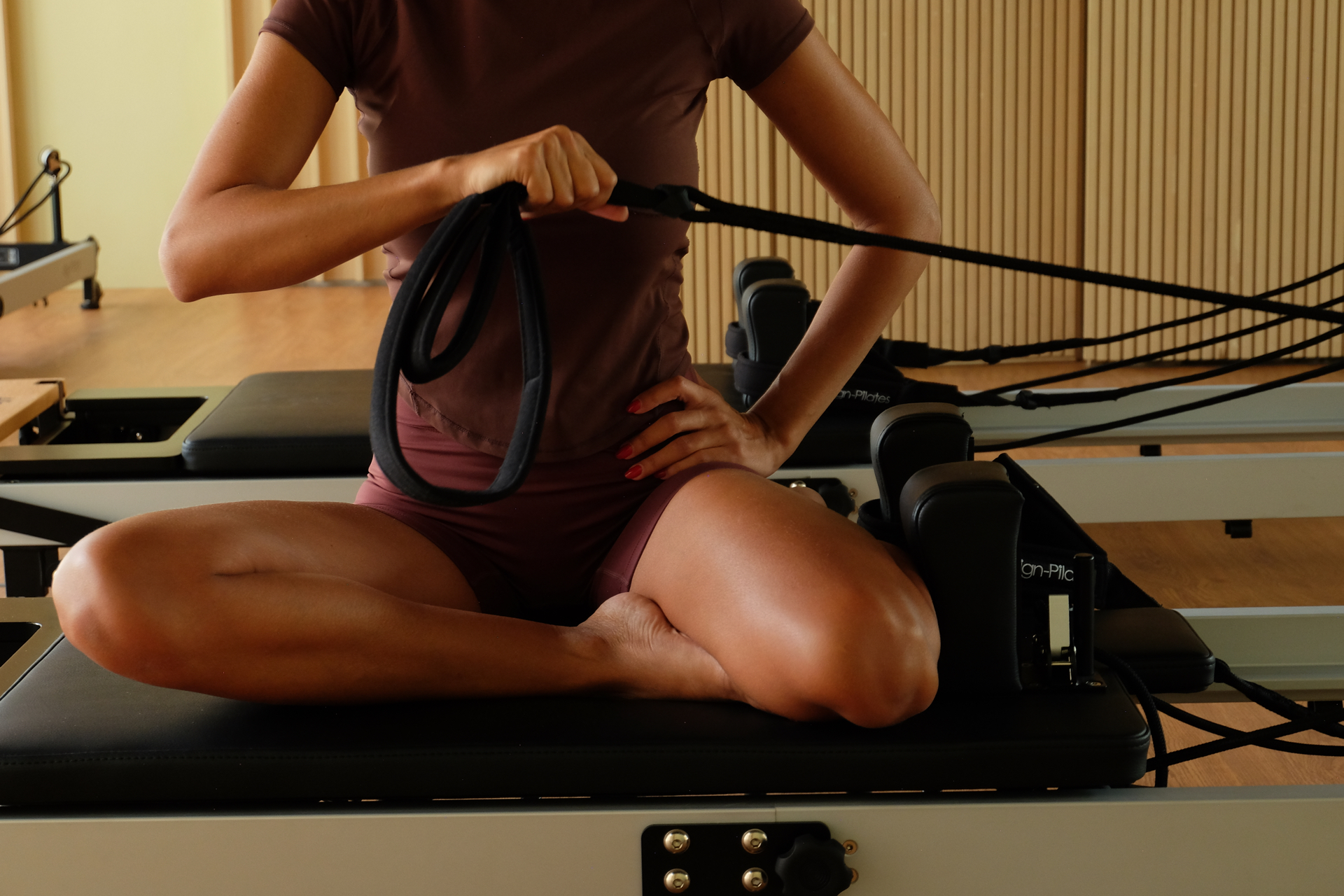
A typical reformer class runs 45–55 minutes. The pace is controlled — you'll do a slow set of 8–12 reps of an exercise, adjust springs, and move on. Instructors cue posture and alignment constantly. You're rarely holding a position to failure; you're chasing quality of movement. You leave feeling worked, but rarely wrecked.
Lagree
A typical Lagree class runs 40–50 minutes with almost no rest between exercises. Each move is done slowly under heavy spring tension until muscles start to shake. The point is muscular fatigue. You leave feeling like you did a heavy strength session — because you did.
Who each is best for
Choose reformer Pilates if…
- You're new to Pilates and want to learn the method properly.
- You're recovering from an injury, have chronic back or neck pain, or want to fix posture.
- You're pregnant or postnatal (with instructor clearance).
- You want a workout that complements running, weightlifting, or another primary sport.
- You want to build long-term strength and mobility rather than sweat through a session.
Choose Lagree if…
- You already have a solid movement base and want a high-intensity strength alternative to weights.
- You've done reformer before and are looking for something more demanding.
- You want to feel worked in 45 minutes and don't have time for two workouts a day.
- Muscle fatigue is your goal — not correction, alignment, or rehab.
What about results?
Both build strength. Both build muscular endurance. Both are more sustainable long-term than heavy lifting or HIIT.
The honest difference: Lagree produces faster visible results in the first 8–12 weeks because it fatigues muscle more aggressively. Classical reformer Pilates produces deeper, longer-lasting changes to posture, alignment, and functional strength — the kind that make you move better ten years from now.
Most clients we see in Dubai who have done both eventually settle into reformer as their base and add Lagree once a week when they want the sweat.
Cost in Dubai
Pricing is broadly similar. Group Lagree in Dubai runs AED 150–200 per class; group reformer AED 130–180. Both offer packs and memberships. Private sessions cost more for reformer than Lagree — largely because classical reformer instruction requires more certification and one-on-one time.
Which should you start with?
If you've never used a sliding-carriage machine, start with reformer Pilates — ideally a private or semi-private session. You'll learn how the springs, straps, and carriage work in a setting where an instructor can actually see your form. Once you know the machine, Lagree becomes a smart, harder cousin to move to.
Skipping the reformer foundation and starting with Lagree is possible — but it's the fitness equivalent of learning to run before learning to walk. It works. It's just not the shortest path.
Ready to start with reformer?
The Form Edit is a boutique reformer studio in Nad Al Sheba, Dubai — four machines, one instructor, and a 45-minute intro session that includes a posture assessment. It's the fastest way to know whether reformer Pilates is right for your body before you commit to a pack or a monthly membership.
Book
Your intro session in Nad Al Sheba.
Four reformers. One instructor. Forty-five minutes to know if the method is right for you.