Reformer Pilates in Dubai: A Beginner's Guide
Getting Started
7 min — 18 July 2026
What to expect, what to wear, and how to choose the right studio for your first class in the city.
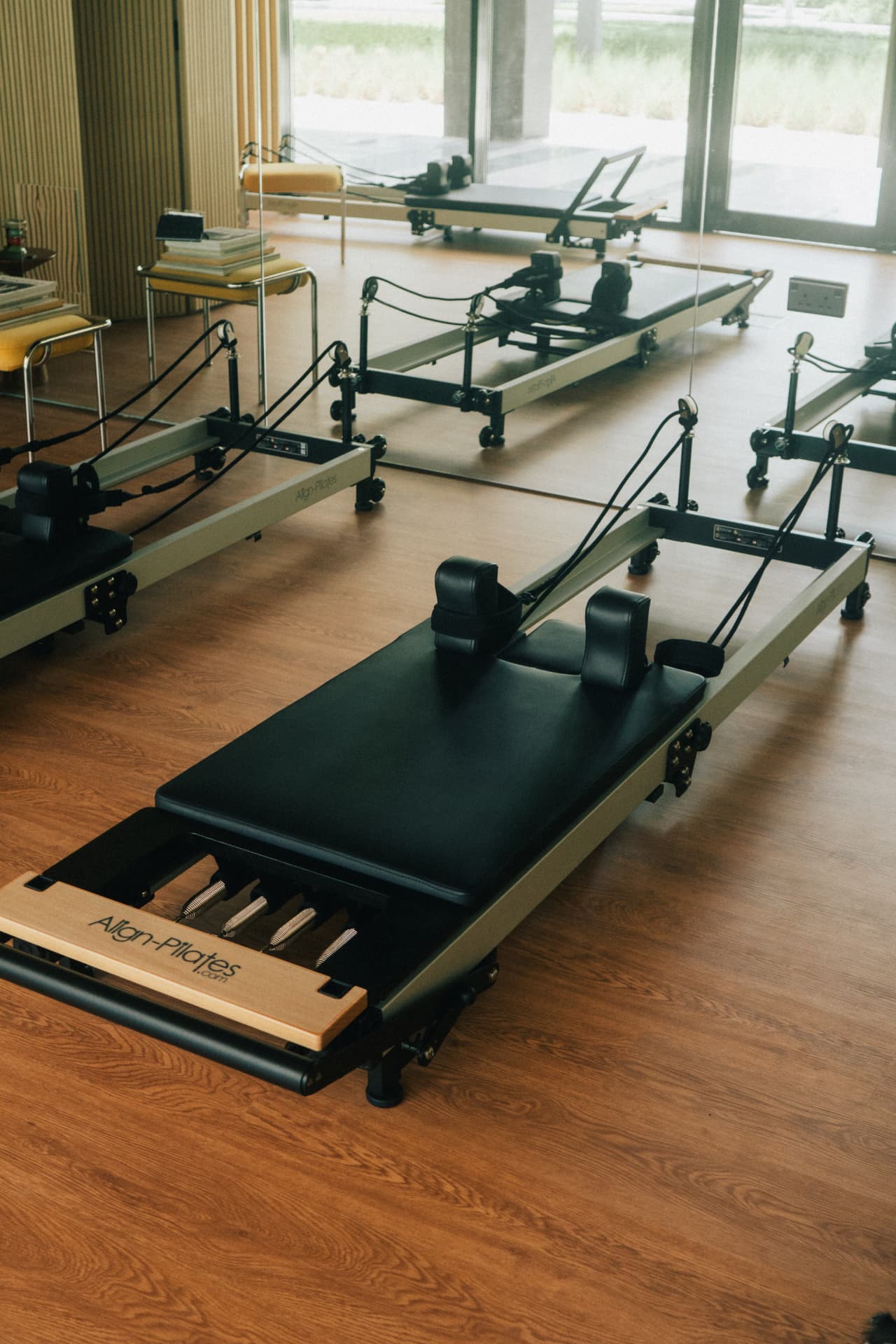
First light in the studio, Nad Al Sheba.
The Form Edit
Nad Al Sheba, Dubai — four reformers, one room.
Reformer Pilates has become one of the most-searched fitness terms in Dubai — and for good reason. Unlike a mat class, the reformer uses a sliding carriage, springs, and straps to add resistance and support at the same time, which is why it feels equally suited to first-timers and long-time athletes. This guide walks you through everything you need to know before booking your first session in the city.
What is reformer Pilates?
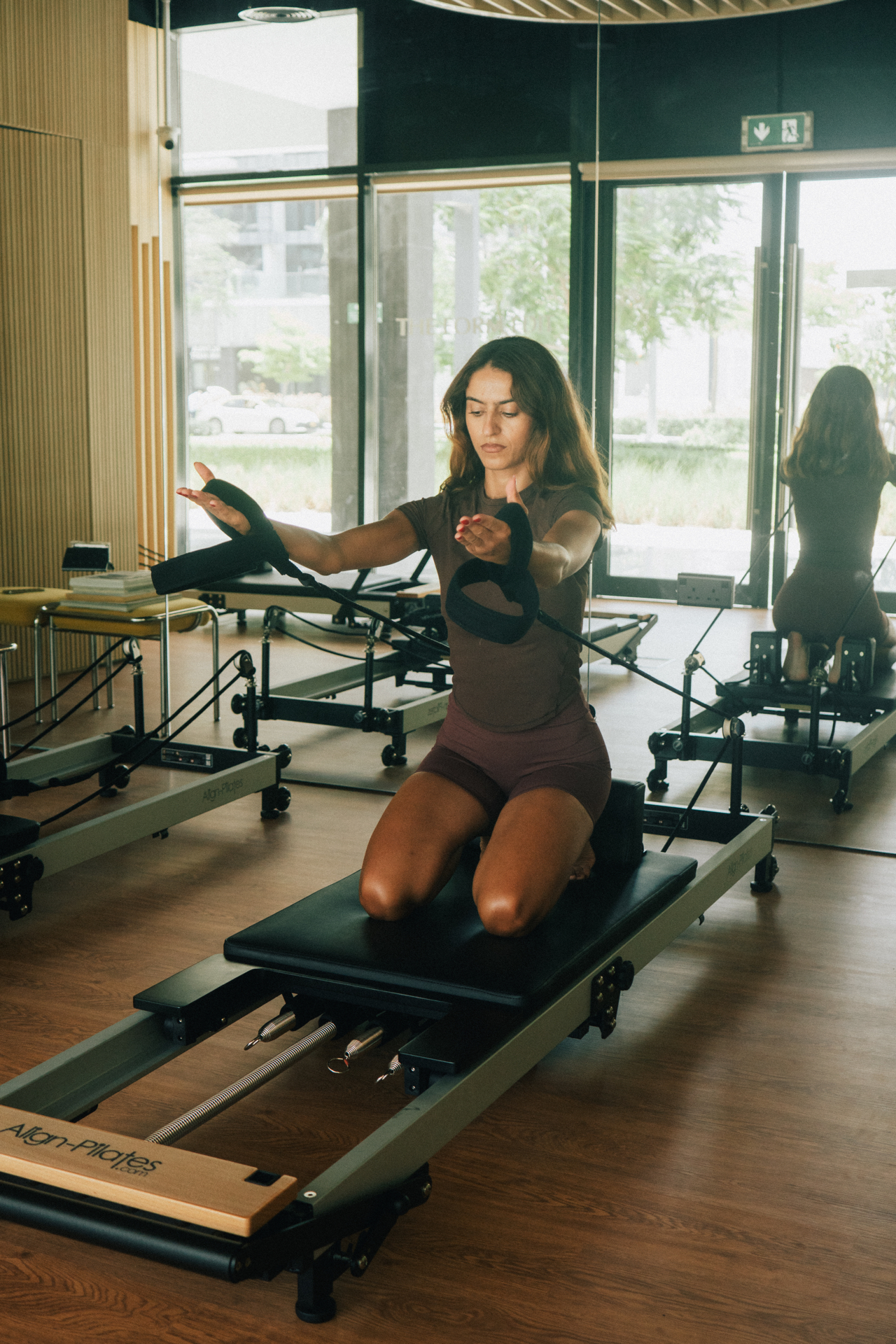
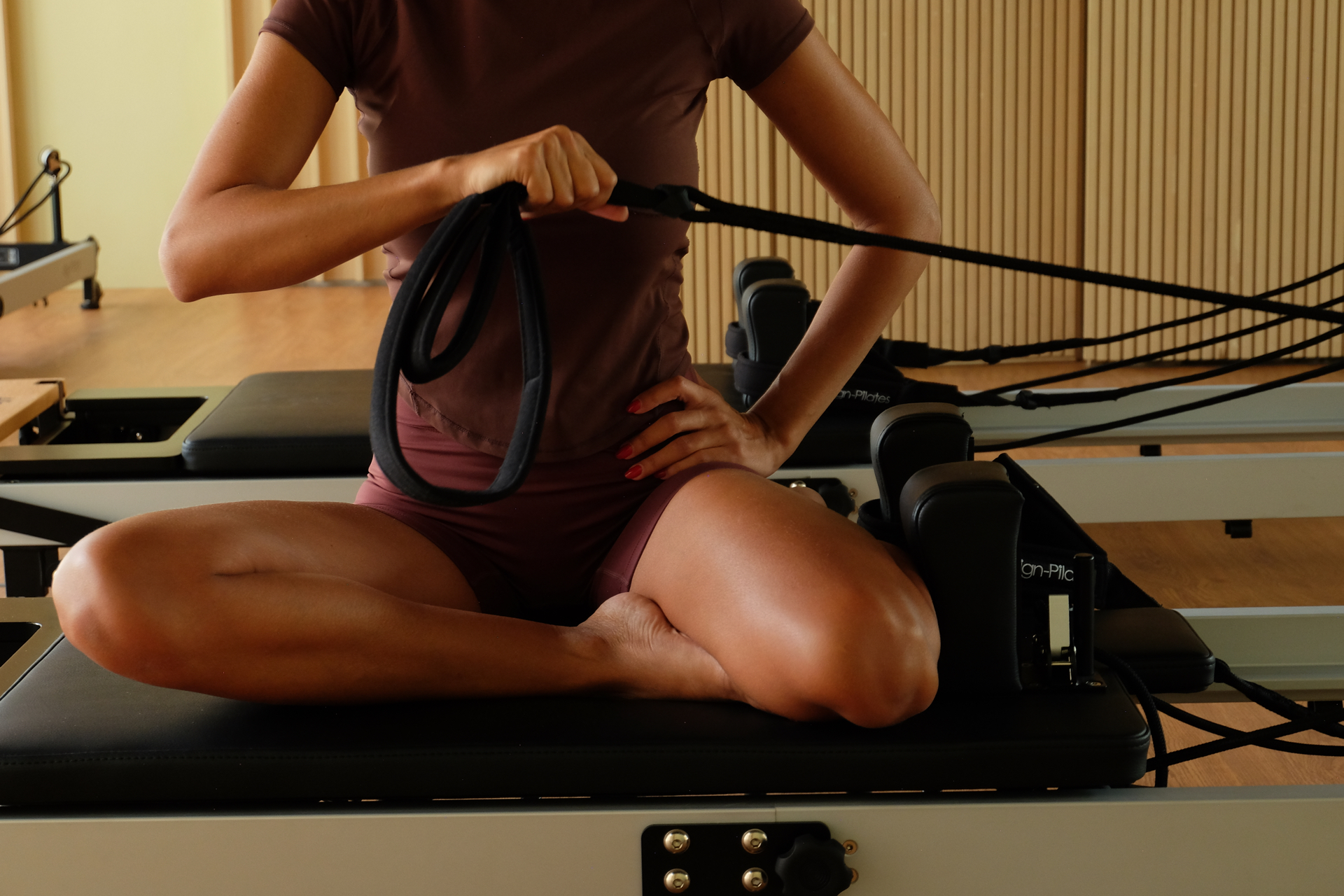
The reformer is a wooden-and-metal frame with a padded carriage that slides on rails. The carriage is attached to a set of springs which you can add or remove to change the resistance. Straps at the top pull from the hands or feet. In a good class, an instructor guides you through 40–50 minutes of controlled, low-impact movement — think slow, precise, and surprisingly demanding.
The method traces back to Joseph Pilates, who designed the machine in the early 20th century to help injured dancers rebuild strength. A century later it's become the format of choice for people who want to build long, stable muscle without the pounding of HIIT or heavy lifting — which is why it has taken off across boutique studios in Dubai from Downtown to Nad Al Sheba.
What actually happens in your first class
Most Dubai studios ask new clients to book a private or beginner session before joining a group class. Expect to spend the first 10 minutes with the instructor going over the machine, adjusting springs and headrest, and running through a short posture assessment. From there you'll typically move through footwork on the carriage, then arms and shoulders using the straps, then core work, and finish with stretching.
You will not lift heavy weights. You will not jump around. What you will feel — often by minute five — is muscles you didn't know you had.
What to wear (and what to skip)
- Fitted leggings and a fitted top — loose fabric catches in springs and straps.
- Grip socks, always. Every studio in Dubai requires them; most sell a pair at the front desk for AED 40–70.
- Skip jewellery, watches, and anything with zippers on the back — they mark the leather carriage.
- Bring water. The studios are air-conditioned but the workout is warmer than it looks.
Private vs group: which should you start with?
Group reformer classes in Dubai typically run 8–12 machines with one instructor. They're social, cheaper per session, and fine once you know your way around the equipment. But for the first three to five sessions, a private — or a semi-private of two to four — is worth the investment. The instructor can see your form, correct posture in real time, and build a plan around your body rather than the room's.
This is exactly why we designed The Form Edit around four reformers and one instructor. It gives us space to actually teach — not just cue.
How much does reformer Pilates cost in Dubai?
Prices vary widely across the city. As a rough guide (2026):
- Group reformer drop-in: AED 130–180 per class
- Group class pack (10): AED 1,200–1,700
- Semi-private (2–4 clients): AED 200–320 per session
- Private one-on-one: AED 280–500 per session
- Monthly unlimited: AED 1,600–2,800
ClassPass and similar apps can lower entry cost, but drop-in credits rarely include studio introductions — and they don't build the consistency that gets results. Most Dubai studios that convert well long-term rely on packs and memberships booked directly.
How to choose a studio in Dubai
- Ratio matters more than location. A studio of 4 reformers with one instructor gives you far more attention than a 12-machine class ten minutes closer to home.
- Ask about the instructor's certification — Balanced Body, STOTT, Polestar, and BASI are the credentials worth looking for.
- Beginners should book somewhere that requires an intro session. That's a good sign, not a hurdle.
- Read the recent reviews, not the founder's story. What people say about their fifth class is what you'll feel by your fifth class.
How often should you go?
Two sessions a week is the sweet spot for most beginners in Dubai — enough to build strength and form, without burning out. Three sessions a week produces noticeably faster results if you have the time. One session a week keeps you moving but progress is slow. Whatever cadence you pick, consistency for eight to twelve weeks is where real change shows up.
Ready to try it?
The Form Edit runs private and semi-private reformer sessions from our Nad Al Sheba studio — four machines, one instructor, purpose-built for clients who want to learn the method properly. First-time clients start with a 45-minute intro session including a posture assessment.
Book
Your intro session in Nad Al Sheba.
Four reformers. One instructor. Forty-five minutes to know if the method is right for you.