Reformer for Runners
Training
6 min — 30 July 2026
Hip stability, single-leg strength, and the unglamorous work that keeps a race season intact.
The unglamorous work that keeps a season intact.
The Form Edit
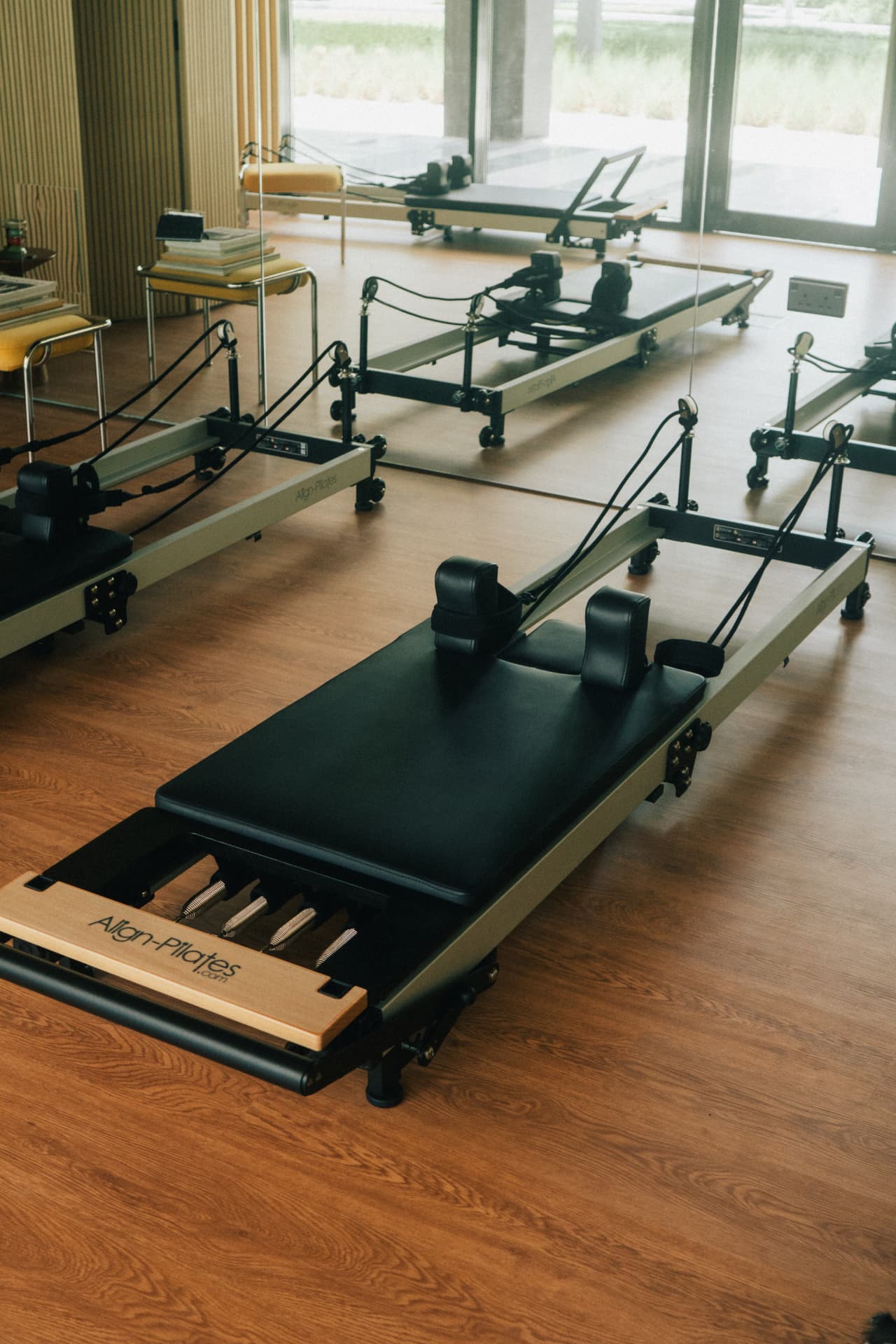
Nad Al Sheba, Dubai — four reformers, one room.
Running is a single-leg sport performed a few thousand times an hour in one plane of motion. Almost every common running injury — IT band, shin splints, runner's knee, hip flexor tightness — traces back to something that plane never trains: rotational control, lateral hip strength, and the ability to stop a knee from collapsing inward on impact.
The reformer trains exactly those things, under load, without adding a single kilometre of pounding.
What the carriage adds
- Single-leg footwork loads each side independently — the imbalance shows up immediately.
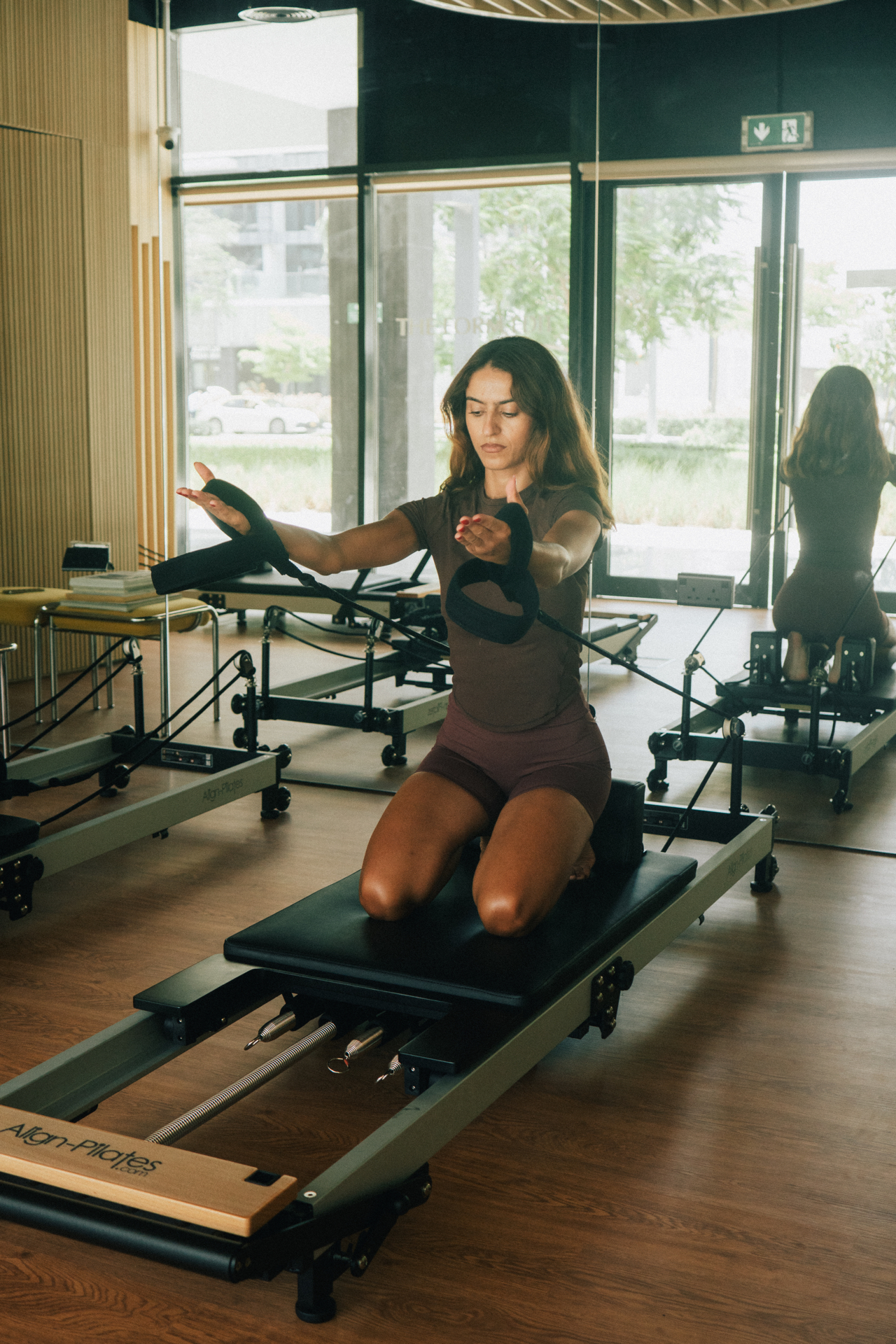
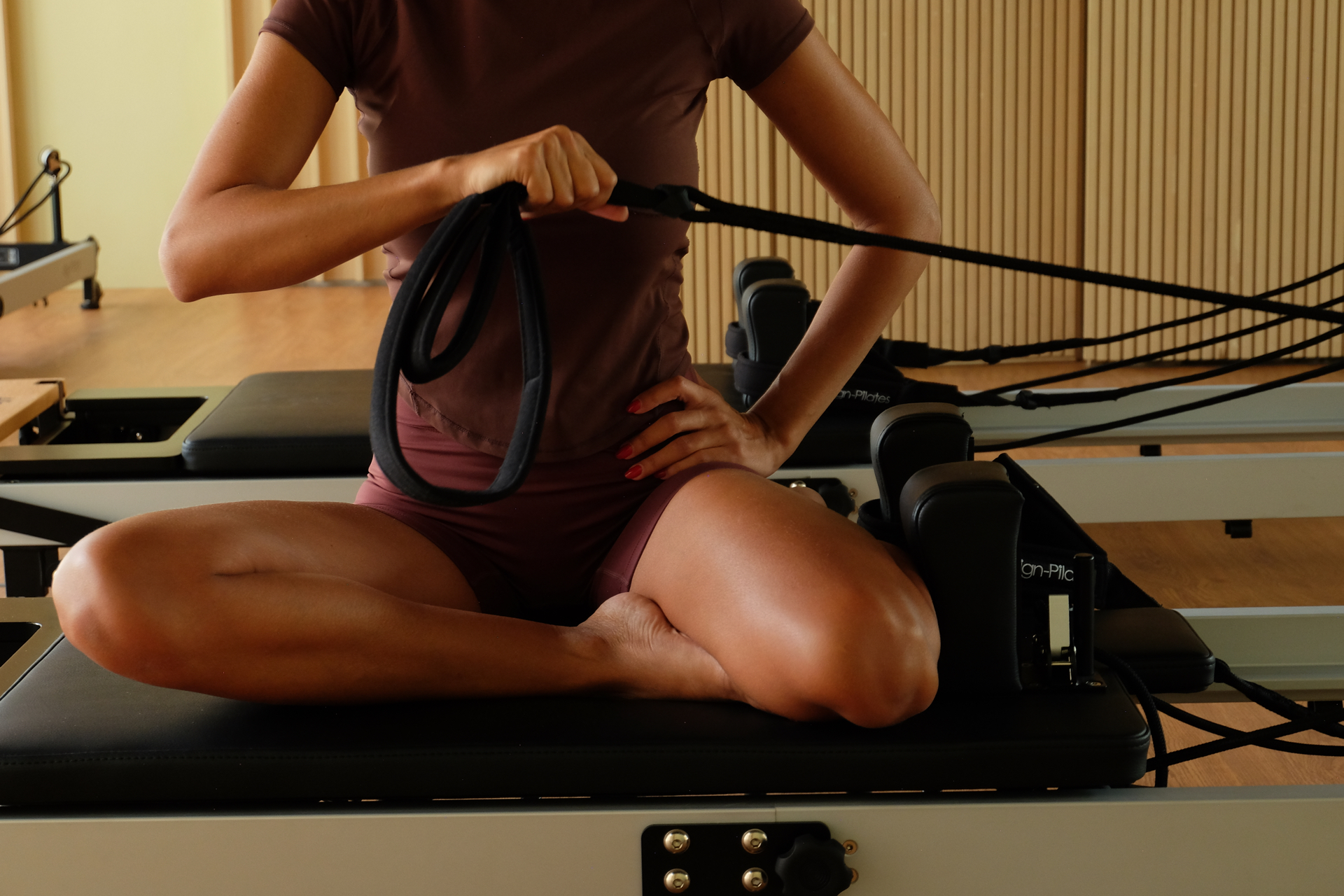
- Straps train hip abduction and external rotation, the two things most often missing in a runner's kit.
- Foot-in-strap work restores hamstring length without the passive stretching that does little for performance.
- Kneeling and standing work on an unstable carriage builds the ankle and foot control that road running quietly erodes.
How to fit it into a training block
Two sessions a week is the sweet spot during a Dubai winter race build. Place them on easy-run days or the day after a long run — not the day before a session that matters. In peak weeks, drop to one and treat it as maintenance rather than stimulus.
What to expect in the first month
Runners tend to be strong in a straight line and surprisingly weak sideways. Expect the first three sessions to feel humbling and the fourth to feel different — most people report a more stable hip in the last kilometres of a long run before they notice anything else.
Coming back from injury
The reformer is one of the few places you can keep loading the legs while a bone stress injury or tendon issue settles. Springs let you scale load precisely, and the carriage supports body weight where the road cannot. Always work with clearance from your physio, and bring the diagnosis to your instructor.
Book a session
The Form Edit runs semi-private reformer sessions in Nad Al Sheba, Dubai — four machines, one instructor, and space to actually coach a single-leg pattern properly.
Book
Your intro session in Nad Al Sheba.
Four reformers. One instructor. Forty-five minutes to know if the method is right for you.