The Slow Workout
Method
5 min — 10 August 2026
An argument for training at half speed — and the surprising strength that follows.
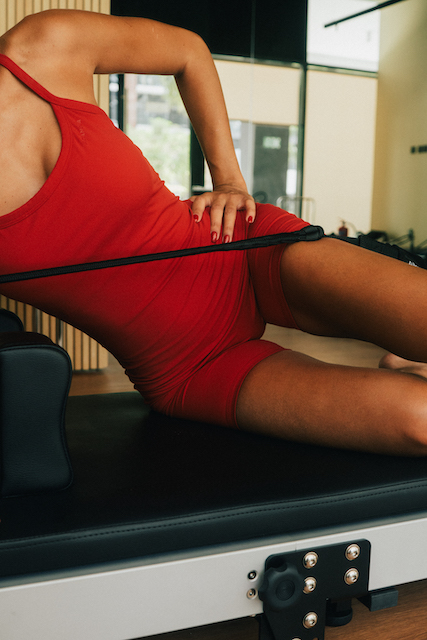
Half speed, twice the work.
The Form Edit
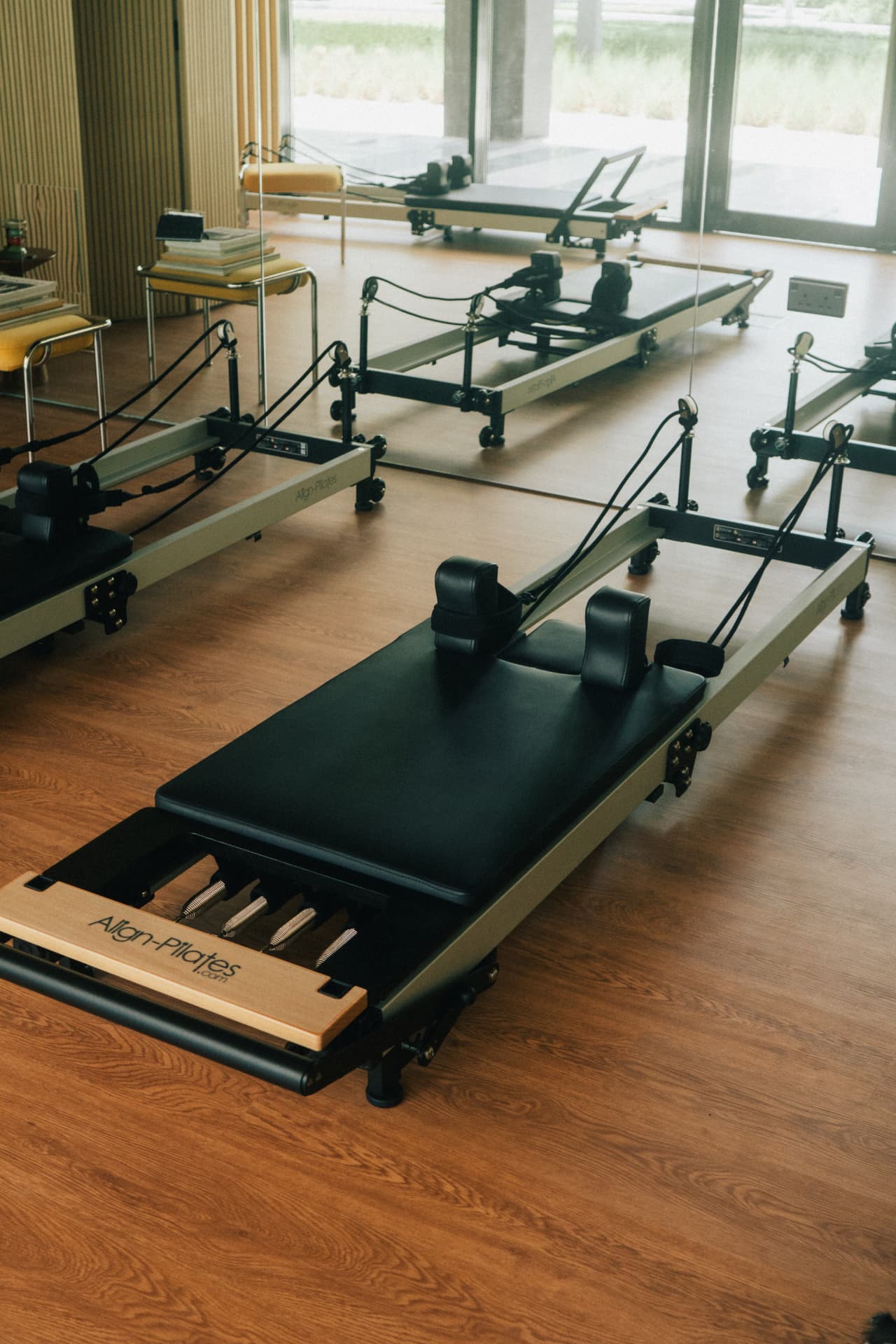
Nad Al Sheba, Dubai — four reformers, one room.
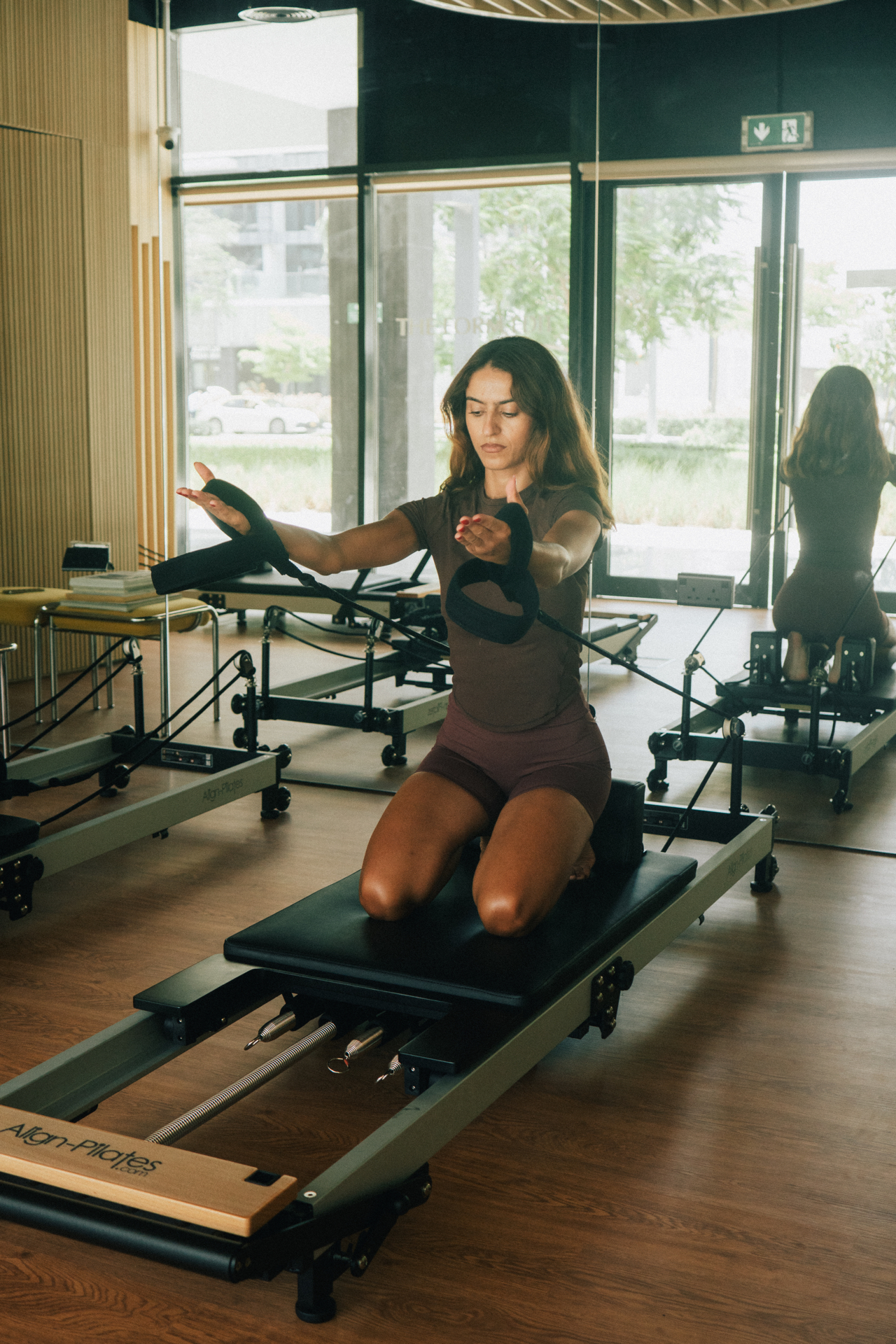
There is a moment in every first reformer session where a client asks, quietly, whether they should be going faster. They have spent years in rooms where speed was the point — more reps, shorter rest, a leaderboard on the wall. Then they get onto a carriage, are asked to take four seconds to press out and four to return, and something in the nervous system objects.
Slow is not easier. Slow removes momentum, and momentum is what most of us have been using to hide.
What tempo actually does
When you move quickly, elastic recoil in the tendons does a share of the work. Halve the speed and the muscle has to hold the load through the whole range — the eccentric portion included, which is where most strength and most tissue adaptation come from. A four-second lower is not a gentler version of a one-second lower. It is a longer one.
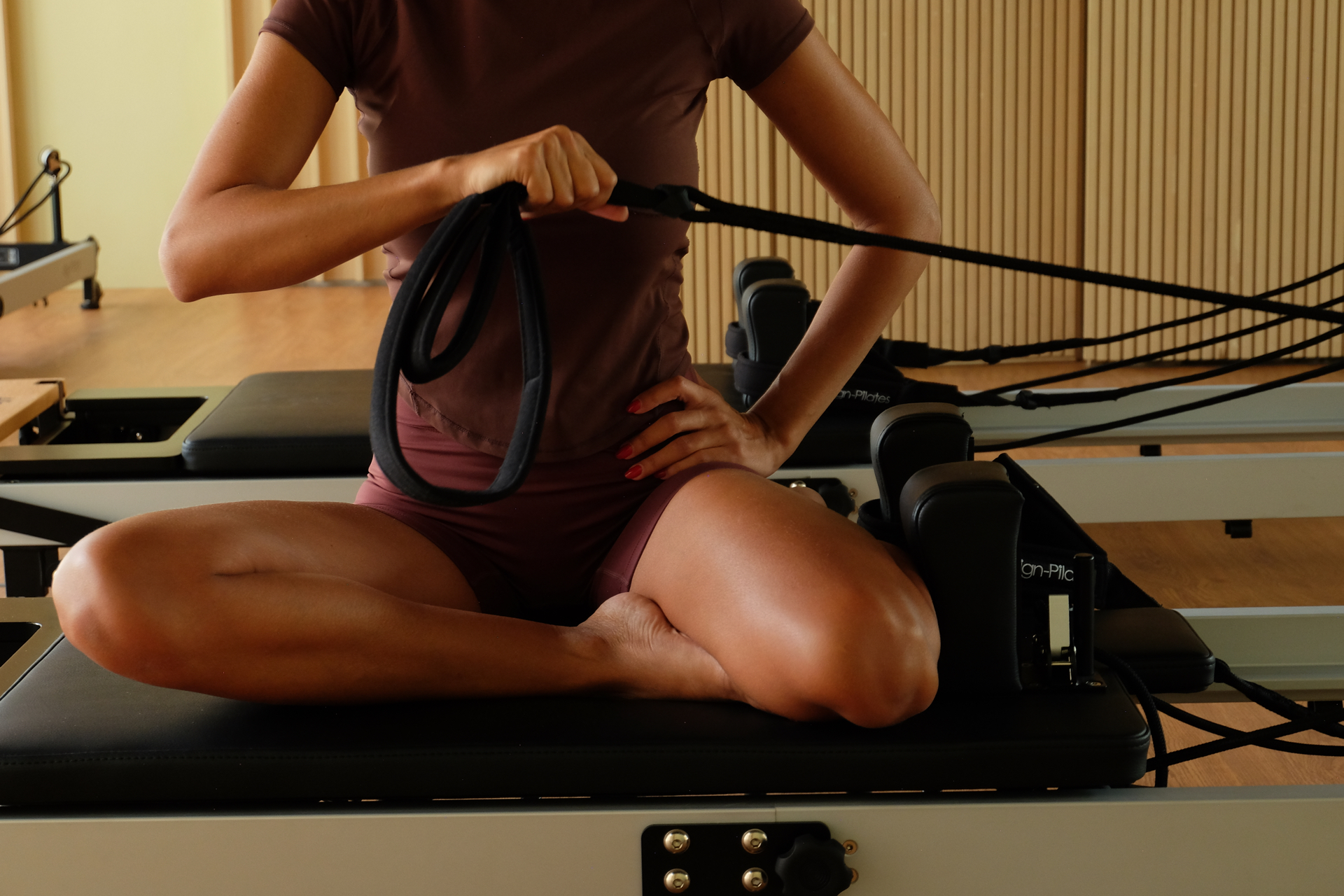
"The carriage does not lie. If you are cheating a movement, it rattles."
The precision dividend
Speed also hides asymmetry. At pace, a stronger side quietly takes over and you never notice. At tempo, you feel your right hip drop, your left shoulder creep towards your ear, your ribs flare on the third rep. This is the part that transfers into everything else — the run, the tennis serve, the long day carried in your lower back.
What it feels like after eight weeks
- Stairs stop announcing themselves.
- You stand differently in queues without deciding to.
- Long-haul flights and desk days hurt less.
- Your other training gets better, not worse — most clients report stronger lifts and easier runs.
How to train slow properly
- Count out loud in your head. Three to four seconds each direction.
- Reduce spring load before you reduce range. Range is where the work lives.
- Stop the set when the tempo breaks, not when the count runs out.
- Breathe on the effort. Held breath is the first sign you have gone too heavy.
Try it at the studio
Every session at The Form Edit is coached at tempo, with four reformers and one instructor in the room. Start with the 45-minute intro session and see what half speed feels like.
Book
Your intro session in Nad Al Sheba.
Four reformers. One instructor. Forty-five minutes to know if the method is right for you.